“Sitting through Peckinpah’s controversial classic is not unlike watching a lit fuse make its slow, inexorable way toward its combustible destination—the taut build-up is as shocking and vicious as its fiery conclusion is inevitable.”
SLANT MAGAZINE

Who made it? Directed by Sam Peckinpah | Written by David Zelag Goodman & Sam Peckinpah | Based on the book The Siege of Trencher’s Farm by |Gordon M Williams | Director Of Photography John Coquillon | Special Effects (not credited)
Who’s in it? Dustin Hoffman | Susan George | Peter Vaughan | TP Mackenna
If you weren’t watching this the week it came out, you might have been watching…
The Andromeda Strain | A Clockwork Orange | Diamonds Are Forever | Willy Wonka’s Chocolate Factory
Production notes and wikipages and whatnot
https://en.wikipedia.org/wiki/Straw_Dogs_(1971_film)
https://www.imdb.com/title/tt0067800/
What’s it all about?
What we have here is one of the most notorious, scandalous, controversial, bloodthirsty and downright problematic motion pictures of the decade. What could have been a taught, bare-bones simple “home invasion” shocker where hicks meet liberals has gone on to be still discussed, pored over, debated, dismissed and championed fifty years later.
We open in the British countryside, familiar to all, via BBC or PBS, from chocolate boxes and period dramas and mumsy Sunday evening detective shows about clumsy sleuthing vets and doddery vicars. We know where we are. However there is a lack of chintz, a lack of soft-focus and no red-roses around the door. It’s grubby. Soiled. Dirty fingernails and wet wool. Broken land-rovers and ratty scarecrows. More Worzel Gummidge than All Creatures Great & Small.
American mathematician David has arrived in his “a bit too flashy” sports car with his young, perky and oh so wholesome wife Amy. All arran sweaters and roll-ups. It’s Cornwall. It’s a small village. They are here to spend some time. We’re not sure how long. A weekend? A year? It’s clear they’ve got trucks delivering belongings and such so it’s not just an overnight stay. The locals, having little more to do than nurse warm pints of bitter and tinker with rusty engines, begin to take an interest in the couple as they drive through the village. Nobody says “arghhh, we don’t get many strangers in these parts…” but from the angle of their bobble hats and bob of their briar pipes, it’s pretty clear this is a novelty. And not necessarily a welcome one.
But what’s this? Amy is a familiar face. From reactions, flirts, remarks and forelock-tugging it seems all the men know Amy.

She is a local who had long since brushed the dust of this small town from her suede boots and gone off to “better herself” in the USA. Apparently something of a small-screen TV star, all the locals flitter and flutter about her. Hasn’t she grown! Isn’t she beautiful? The snotty, snarly menfolk titter and gawp and make filthy remarks from behind their dimply pint jugs. Oh they remember Amy all right. And it looks like they are keen to get very reacquainted. And they’re not going to let some nerdy jewish American academic stand in the way of what’s theirs.
David and Amy do their best to settle in to the old “Trencher’s Farm” house up on the hill. A white stone, solid but draughty place. Full of old furniture, copper pots, creaky pipes and damp. David has come to write. To work. However conversation between the lovers suggests they are not so much holidaying in Cornwall as running away. This is the time of Watergate, of protests, of Vietnam, of riots on campuses. Is David hiding from confrontation? Has he done wrong? Is he scared of the politics? Of making a stand? Of having his comfy academic life disrupted by campus violence and tenure-committee protest? We can’t be sure. But he doesn’t seem proud to have left and we get the sense of hiding from the world. From his fears.
On the other end of the scale, a group of the town’s locals are anything but backward in coming forward. Hired by David to repair the roof of a barn, they arrive in a noisy truck, all bare-chested, beer swigging, noisy, aggressive and bullying. They make themselves far, far too at home for David’s liking. A little too friendly to Amy, a little too eager to walk in uninvited and drink from his fridge.
David isn’t brave. But he isn’t stupid. Better to join them than to beat them. And we squirm as we watch David try and ingratiate himself with the butch locals. They despise him and his tweedy effeminacy. His glasses, his jumpers, his Mozart, his mathematics. He buys them drinks, tried to befriend the gruff head of the town, Tom. A grizzly, drunken bear of a man with a young daughter who is forever being told to stay away from the local paedo/weirdo Henry who stares and stumbles about the cobbled streets.
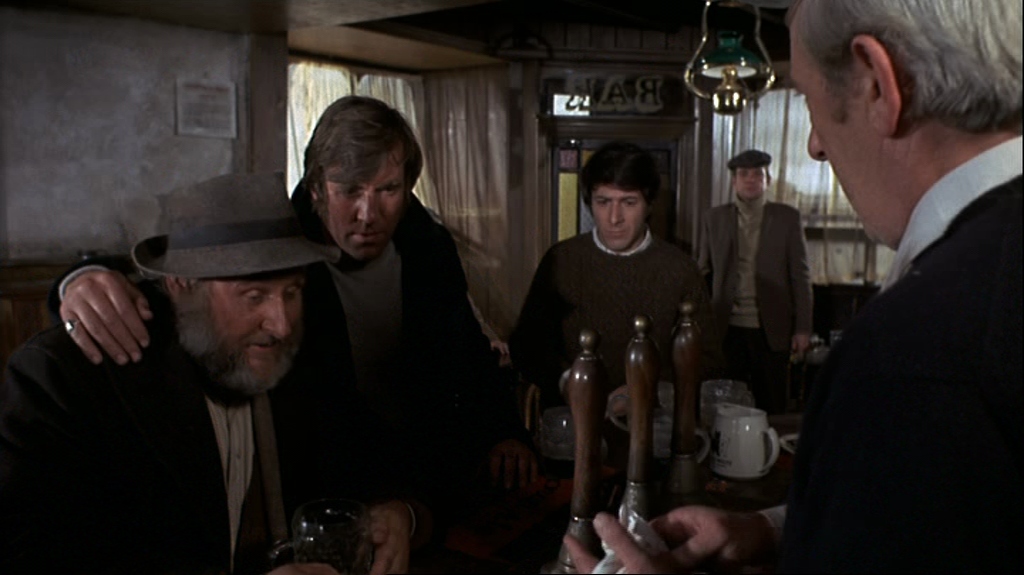
Amy is bored. David just wants his blackboard and his studies. Any attention from the workmen, with whom she clearly shares a fumbling sexual past, is better than no attention at all and some flirting, flashing coyness keeps her idly amused. However she is clearly over-stepping the mark as it is only too clear to us the gruff and female-starved men want more than pranks and giggles.
A sign is left when David finds their cat hanged in the cupboard. Was it the workers? Kids? A prank? A warning? David doesn’t want trouble. Or confrontation. His excuses infuriate Amy who accuses him of cowardice in the face of “men.”
Meanwhile, setting their trap, the workmen tease and taunt David about his manliness and his lack of machismo, finally goading him into spending a day with them. Drinking and hunting. Feeling threatened and on the back foot, David unwisely agrees to join them. Maybe he can prove himself and get on the same level with these guys? Perhaps Amy might respect him a bit? Maybe they’ll finish the damned roof and leave him alone.
However the plot is merely to get David away from his home. Amy’s old flame and head of the workers Venner, arrives at the farmhouse, forces his way in and makes is frighteningly clear he will have his way with Amy, whether she lets him or not. At this point, in a key moment, Venner rapes Amy who is too terrified to fight, too eager to get it over with or just frozen with fear. Her lack of “fight” only encourages Venner to believe her complicit, confusing matters even more. There is no confusion however when one of Venner’s workmates arrives and Amy is violently held down and raped once more by this second man.
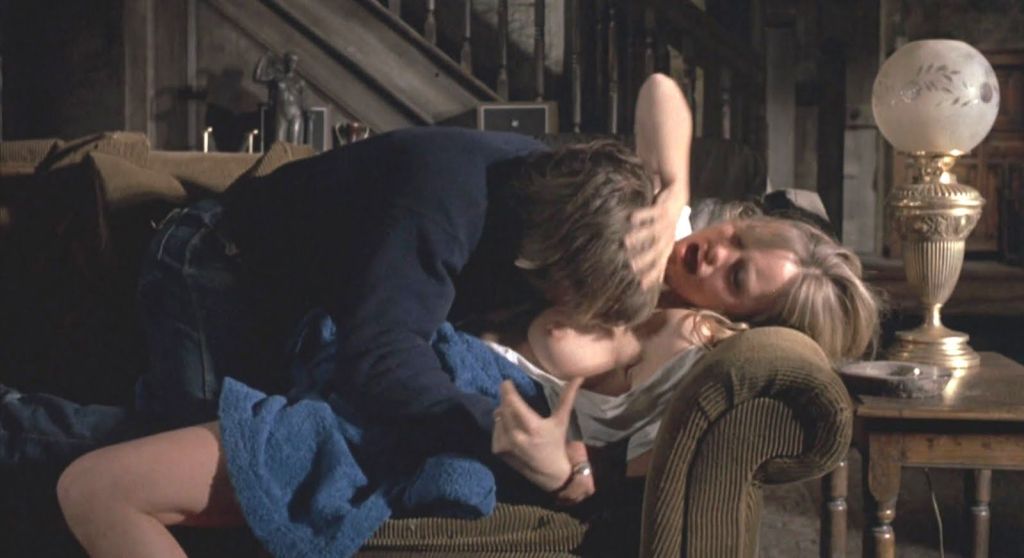
David returns to the homestead, having been abandoned as a prank by the workers. Amy says nothing of her ordeal but is clearly traumatised and shaken by it. Why tell her husband? What would this pathetic man possibly even do? The guy couldn’t even defend a cat.
Finding courage, at the end of his tether form the bullying and taunts, David fires the workmen. Pays them off and sends them packing in an odd show of bravery. But these are not men to take this condescending dismissal lightly.
That night, at a church fayre, Tom’s daughter takes local Henry’s wandering hand and they depart the church-hall together. Once it is clear she is missing, the menfolk become a spitting, violent and drunken lynch-mob, out with guns and tools to hunt down the evil paedophile for fear of what he has done to Tom’s daughter.
In a panic, befuddled Henry hides, smothering the girl to keep her silent for fear of being caught. However the smothering turns to suffocation and now he has a dead girl in his arms. Henry, terrified of retribution, makes a run for it, only to be struck hard by David and Amy’s car on a dark road.
Unaware of the kidnapping, death or approaching lynch-mob, David and Amy feel responsible for Henry’s injury and take him back to their farmhouse. They will tend his wounds and await an ambulance. However the townsfolk finally have Henry trapped and no feeble intellectual American will keep them from justice.
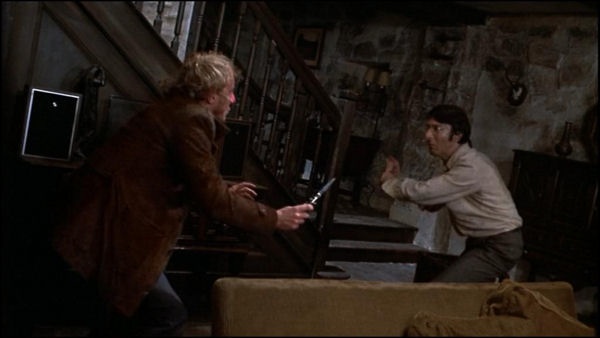
The stand-off is prolonged. Violent. Bloody. As David is forced to take stand to protect his wife, Henry, his home and his own sense of self, the drunken mob begin to smash, burn, punch and shoot their way through the house to beat bloody revenge out of Henry. And of David, should he stand in their way.
The last twenty minutes we see what happens when men are pushed to the edge, when masculinity is threatened, when it becomes us vs them, when might meets right and the two unstoppable forces of a small-town’s violent rage and a man driven insane with territorial vengeance meet in the Cornwall darkness with nothing but empty rifles, stove-boiled fat, glass shards and a rusty bear-trap between them.
Is it any good?
Is it any good? It’s Straw Dogs. It’s an absolute masterpiece of its type. Is its TYPE any good? Well then we’d better dig into that. Here we go.
Firstly, as I consult the pages of notes made during my watch, it’s horribly grubby. I mean genuinely. Nature red I tooth and claw. It reeks of manure and dirt. Of shit and dust. The film has blue cold mould in every frame. Fingernails crusted with grime, Wet dog blankets, sopping cordory, dank musty rotten wood and creeping, seeping cigarette smoke.
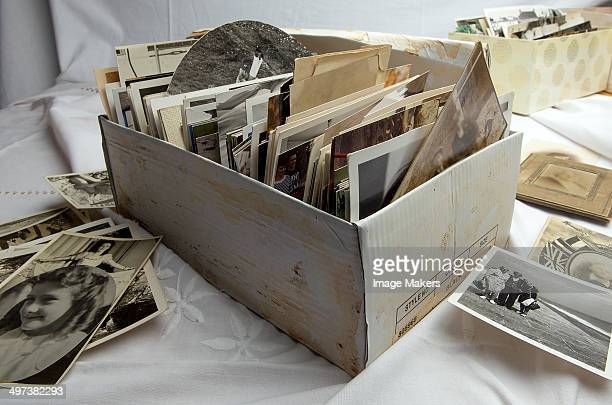
The cast are gruesome. Natural, but as far from Hollywood glitz as you can get. Buck teeth, bowl cuts, ratty sweaters and stubble. It’s as if the whole film has been taken with an old Kodak Instamatic, the brittle black plastic cameras of the 1970s, that produce those ectochrome colours and photos square with rounded corners. This film belongs in an old green Clarks shoe box in a cold plywood sideboard.
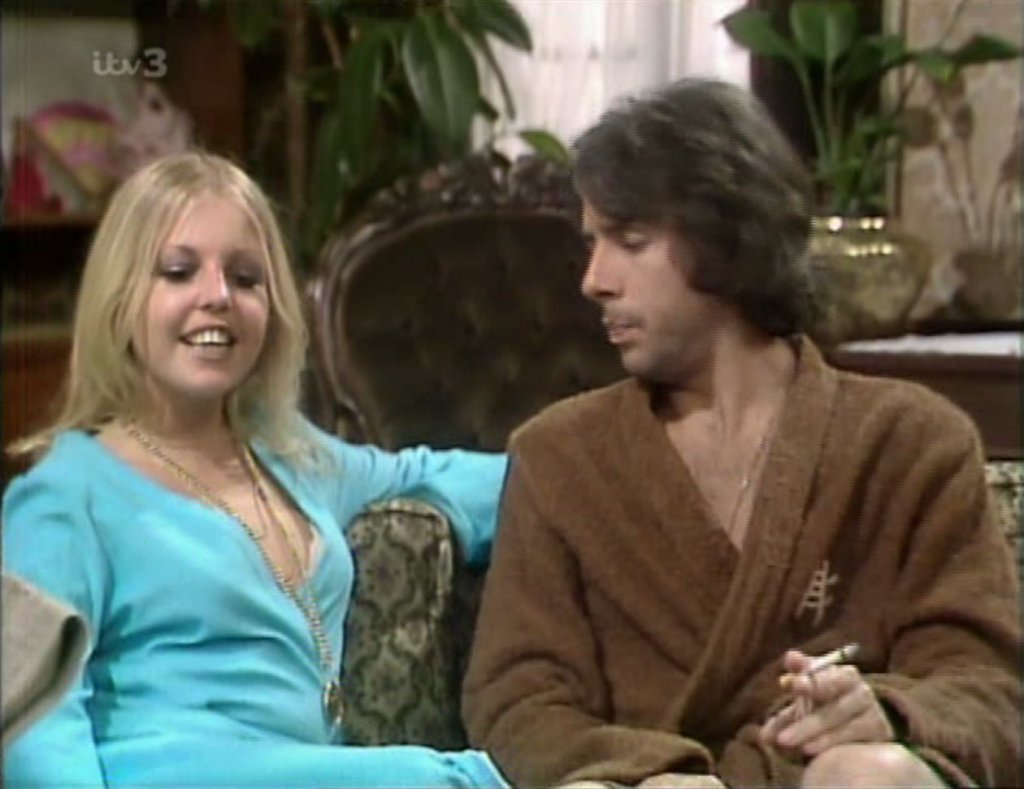
The olde atrmos is helped, when viewed from the shiny laptop digital world of 2021, by faces we know from the small British screen. Faces from ITV, from BBC, from crackly Christmas specials and saturated sitcoms. The young girl who is abducted is a buck-toothed mary-jane wearing Sally Thomsett who aficionados of 70s telly will know when she grew up to be a cheeky buxom rascal in Richard O’Sullivan vehicles Man About The House. All mini-dresses and babycham. Somehow knowing she has this giddy future ahead of her gives her abduction a leering, Brady & Hindley foreshadowing.
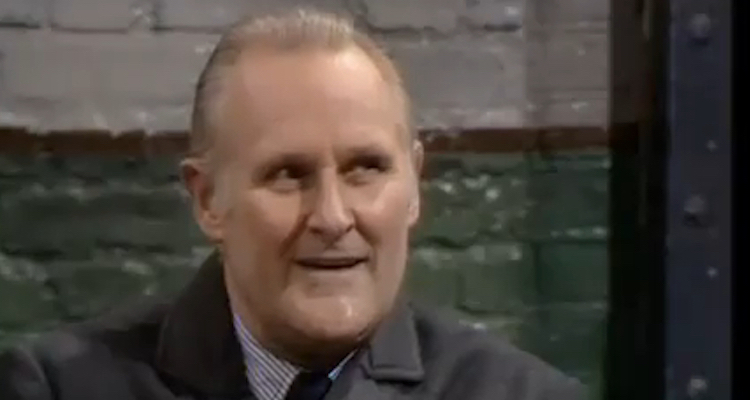
Buried beneath ratty beanie and scraggly beard is Peter Vaughan, the terrifying glare of Porridge’s ‘Grouty’ as the thundering force of nature who is Tom. British TV fans will know his threatening prison persona, all rough denim and screws on the take. We shudder just to see him drunk, shouty and bitter. I don’t think we ever discover what brought Grouty to HM Prison Slade. But it wasn’t for parking on a double yellow.
Uncredited due to a leg injury which meant he could not be insured on set, we have horror stalwart David Warner as the “misguided” but dangerous paedophile Henry. My generation recognises his shuffly paranoia from his turn in Richard Donner’s The Omen, when he scurries shiftily about trying to persuade a brooding Gregory Peck of his son’s fate, only to enjoy one of horror fans’ favourite beheadings at the hands of a glazier’s truck.
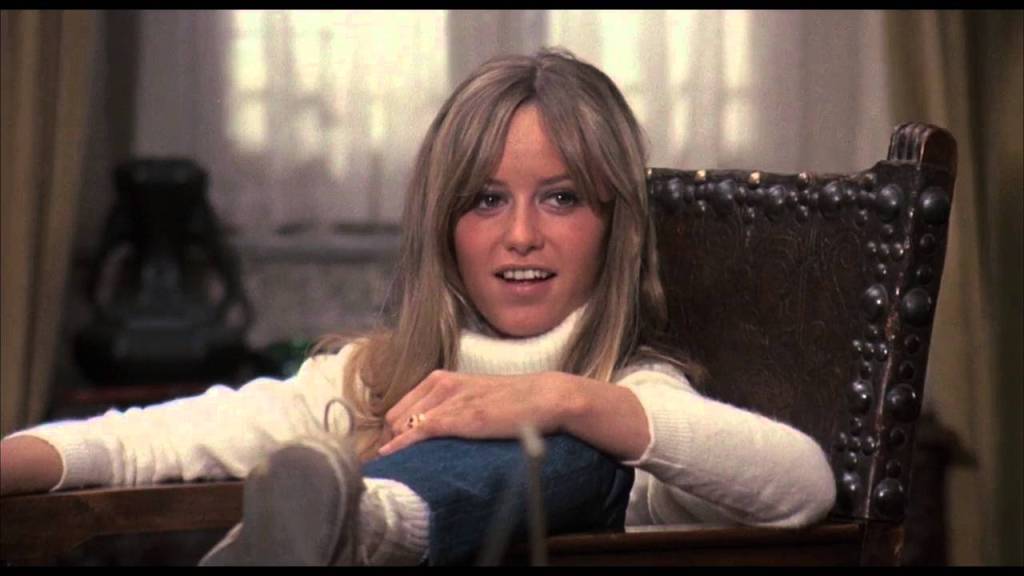
David’s wife Amy is Susan George. Star of episodes of Tales Of The Unexpected and Armchair Theatre, George was always typecast as the “sexpot.” Busty nipples poking through tight sweaters, mini dresses and knee-high boots, her country-girl charm has a naughty innocence. She seems both virgin and whore with her blonde coquettishness, her “who, me?” innocence but a knowing wink when it might get her the attention she craves. We have a longing to bring her in, wrap her in cotton wool and warn her of wolves.
Which brings us to our “hero”, David. An intense, trembling Dustin Hoffman. At this point in his career, he was only 5 movies in, far from being the method acting legend we know now. However his brief career had seen him jump from awkward sex-symbol in The Graduate to limping pimpy Ratzo in Midnight Cowboy. Straw Dogs was a new Hoffman. Playing a little on his “academic hottie” persona Ben Braddock, we see his apologetic awkward nebbishness pushed to its limits here to reveal the man beneath. And it’s an extraordinary transformation.
I am reminded of what, I think, Joe Queenan or perhaps William Goldman (apologies if it was Kermode or Ebert) said about transformation in movies. And Hoffman overlaps here. Indulge me.
When Hoffman won his Oscar for Rain Man, playing the autistic savant Raymond Babbit, it was seen as a spectacular method performance.
However Queenan/Goldman (I think) is not so impressed. A performance of “acting tropes” (stutters, twitches, stammers, tics etc) is bread and butter to an actor and a show-offy bit of schtick. The real acting, Queenan suggests, is the more understated but compelling development by Tom Cruise’s Charlie as he turns from wheeler-dealing salesman to caring family man that is really the acting masterclass.
Watching Hoffman slow go from shy academic to vengeance filled territorial monster is a performance of startling achievement. “Twitching’s easy” as nobody has ever said. “Growth is hard.”
The movie itself is a rollercoaster of tension. A classic tale of us and them. And one picks one’s side carefully.
The tale of the outsider in the wrong place is as old as the hills in which eyes are sunk.
City folk faced with “country ways” has been a staple of tension and horror since stories began. The fear of the comfy middle-class life upset and disrupted by the earth, by reality, by nature. The suburbanites faced with the darkness of the outback (Hills Have Eyes, Wolf Creek, The Texas Chainsaw Massacre, Deliverance); the “polite” normality against the feral Council Estate/Projects viciousness, (Eden Lake, Falling Down), the tourist in the wrong place (An American Werewolf in London). Hell, there’s even a cinematic argument to make that Alien is a simple “culture vs nature” stand-off. A woman who values hairspray vs a pure survival machine? “I admire its…purity…”
We are forced somehow to pick a side. Is a man who knows maths and books and Mozart a real man? I mean…really? Where would he be with a fire? With a BBQ? With a broken roof? Stumbling about apologetically, trying to get a plumber on the phone in the face of a hands-on-hips wife who thought men were meant to be “good at this stuff?”
Not that the females in the movie are wide eyed innocents. One of the joys (not the right word, but bare with me) of Straw Dogs is the confusion. I think it was Mark Kermode that criticised the remake as being bereft of “problems”. The story IS problematic. It isn’t a simple ys vs them tale. It’s not good vs bad, or right vs wrong or culture vs ignorance.

A watch of the movie shows Susan George’s Amy flash her knickers at the sweaty, panting idiots on the roof. Bare her young breasts through an “innocently” open window. Playing the men at their own game.
A right, of course, anyone has to do. However it starts the audience asking very troublesome questions about behaviour, about innocence, about naivete, about expectations. Questions we might not be braced to face head on.
“Why don’t you wear a bra?” asks David at one point. “Why should I?” responds Amy. And who are we to argue?
The rape scene is the moment that got the censors rushing for their scissors and better arguments than mine have been made about the work they did. I cannot speak for Peckinpah, for George or even for the novelist Gordon Williams’ intent. It is true that the scene is a woman taken violently against her will. It is clear the sex is rough, unwanted, brutal and violent. It is the movie’s choice however NOT to have Amy screaming and pounding and fighting and punching throughout that caused censors to wonder exactly what they had. Was this a woman consenting? Giving in? Giving up? Or, god forbid, taking some pleasure from this violence? It can be read in every way and every cut of a scene, trim of an expression, cutaway from a moment of pause on a clinch tells a different story. Cut out the troublesome “reaction shots” and we leave the audience to interpret the reaction themselves.
My thoughts, worth nothing 50 years later, is a scene of a violent assault. That these people may be past lovers, that this may not be the first time he has forced himself on her, that an eagerness to get it over with may be preferable to a drawn out punch up? We don’t know. It’s up to us. However the “idea” that Amy may be “enjoying” the experience (her lack of fight, her gripping and grasping the biceps) was enough to have scissor happy editors try and repair the scene to something easily understood. And that, I believe, is the issue. There is no room for nuance. There is no room for discussion, for debate, for empathy or understanding of this trauma. We need a clear good guy/bad guy dynamic. It’s a horribly scene to watch BECAUSE it’s so troublesome and inflected with whats and ifs and buts and maybes. The BBFC simply didn’t trust an audience to understand the complexity of the act, the ex-boyfriend attack, the familiarity, the maybe-they-did-this-a-lot, the give-in-so-it-ends-quicker supplication.
More essays will be written about this. And long should they. It’s a powerful moment and the ambiguity and what-the-hell? These moments are what lift it from mere sex-attack-titillation.
There is so much more to say about this movie, and my little blog is hardly the place. Hoffman wanted a smaller age difference between him and his leading lady. His middle-aged academic and Susan George’s perky youth suggested a relationship he didn’t think helped the plot. It’s not a movie about an ogling academic and his sophomore crush. However we cannot help, given the casting, side with the locals who might feel this “old man” has taken the flower of innocent youth from their simple Cornish village and corrupted her with his bookish ways.
The fact that David and Amy are charged with protecting a paedophile? What could be more a liberal dilemma than the need for “due process” in a black n white world of right and wrong? Henry killed a young girl. End of story, surely? We are torn brilliantly between sides. If we were David? If we were Tom? The strength of the movie is in this back and forth. We side for neither, we side for both.
And it is in this that, for all its problems, politics, polemics and prejudice, Straw Dogs remains a masterpiece in execution, script, performance and polarizing positioning.
Nasty?
Hoo boy. Yes. Those who know Peckinpah for The Wild Bunch (albeit a movie I have yet to see at time of writing, but right up there on my “next to.” I think this weekend), no punches are pulled.
The rape is spiteful, teary, thrusty, gruesome, tearful and upsetting. The final 20 minutes of the house attack pull no punches. Gunshots, bloody wounds, torn flesh, glass cuts and gruesome wounds abound. To be fair, there is no lingering voyeurism of the violence. We do not see unnecessary close-ups, slo-mos or gratuitous body-horror. Acts are short, hard, real and horrible. Peckinpah, while enjoying the ballet of violence, is not interested in pause-button fetishism or teenage “wooaarrgh!” in his battles. It is angry people against angry people. We see it. We are not encouraged to enjoy it.
The last moments where “Chekov’s gun” come into play and both barrels of swinging and heavy farmhouse shotguns explode and bang with raging ferocity are the necessary bloody finale. That rusty bear trap over the fire place, which hangs ominously throughout, is not there for show.
Ban worthy?
As ever, consistently, there is nothing in Straw Dogs that could corrupt or harm a mature adult viewer. That the non-regulated industry did nothing to ensure viewers were adults or mature was of course the entire problem. Cuts made by heavy handed censors that removed necessary or “troubling” reaction shots left audiences with too much time to decide how the characters were feeling. An attack not laced with screams and struggles is a complicated attack. There is more to life than fight or flight, and this nuance is where the trouble sits. Aside the flight or fight there are also the reactions of “freeze or fold.” These are no Hollywood reactions and we are not used to seeing them on the screen, Heroes and cowards either run or punch. Anything else is…questionable. Why not run? Why not fight? Can one freeze in terror? Or is to “freeze” to “invite more?” A movie who’s set up, performance, framing and ambiguity invite conversation and debate is a movie for sincere thought and discussion. This isn’t a goodie/baddy Die Hard shoot-em up. And whether the audience of 1971 was prepared to put the intellectual work in I suppose caused and erring on the side of caution.
What does it remind me of?
Well nothing we’ve really seen so far. It has the home-invasion shocks and, what Kim Newman calls, the “hand through the window” jumps, of Night Of The Living Dead. It has the flashes of fleshy gore of some of the earlier movies we’ve discussed. But it’s done for real. More like a public information film about the dangers of farm-equipment, barbed wire, rusty knives or damp floorboards. You know those cold, dark, damp 1970s short ads the Government put out about the danger of Fireworks?
About swimming in deep waters? About Frisbees up in pylons? That’s the aesthetic. Designed to upset, to shock and to have one fearful of the unknown darkness of woodlands and strangers.
Where to find it?
Usual places. Amazon Prime has it. You can get shiny Blu Rays and DVDs from the usual places. And YouTube (18+) will show you a decent Criterion Cut version for free here.
 letsgetthebannedbacktogether.uk