“My objection to The Last House on the Left is not an objection to the graphic representations of violence per se, but to the fact that the movie celebrates violent acts, particularly adult male abuse of young women … I felt a professional obligation to stick around to see if there was any socially redeeming value in the remainder of the movie and found none.”
GENE SISKEL

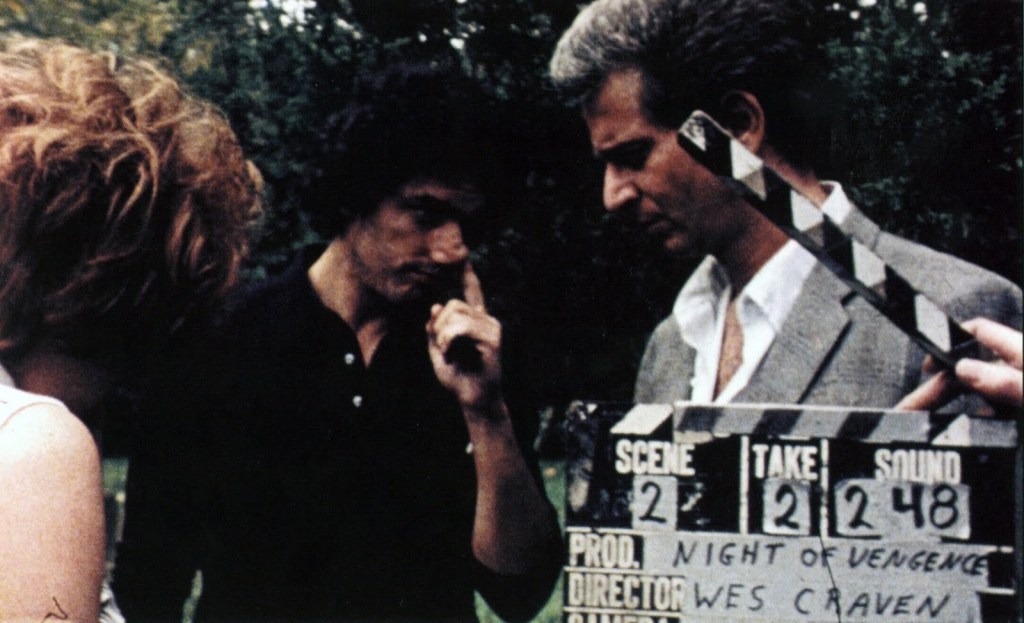
Who made it? Directed by Wes Craven| Written by Wes Craven | Director Of Photography Vicyor Hurwitz | Special Effects/make up Anne Paul| Music David Alexander Hess
Who’s in it? Sandra Peabody | Lucy Grantham | David A. Hess | Fred Lincoln | Jeramie Rain | Marc Sheffler
If you weren’t watching this the week it came out, you might have been watching…
Night Of The Lepus | Blacula | Chloe In The Afternoon | The Italian Connection
Production notes and whatnot
https://en.wikipedia.org/wiki/The_Last_House_on_the_Left
https://www.imdb.com/title/tt0068833/
What’s it all about?
We open with a terrifying caption: “The events you are about to witness are true. Names and locations have been changed to protect those still living.” We should then cut to a pinch of salt the size of Utah. But we don’t. More accurate would have been: “The events you are about to witness are a gratuitous “bloodied gore fest and sex up” of an Oscar wining 1960 Bergman movie which itself was based on a medieval Swedish ballad. Names have been entirely made up and the locations were anywhere the film-makers could find a socket to plug the lights in before the cops turned up.” But it isn’t. Heigh-ho. Let’s crack on.
A serene pastoral scene. Dark lakes, ducks and birdsong. We are in nature, which threatens to be more red-in-tooth-and-claw than anyone has any right to expect for 3 bucks and a bucket of popcorn.
On a placid East coast road in northern New York State, a simple postman drives up to a house. The home of the local doctor, his humble highly-strung wife and their nubile hippy 17 year old daughter Marie. Which she spells “Mari.” Tells you all you need to know about how ditzy and irritating she’s going to be. Postie dumps armfuls of birthday cards into their old school Charlie Brown mailbox.

The aforementioned Mari, meanwhile, is getting all soapy and self-involved behind dimpled glass as she showers and flashes boobs and gets herself all dolled up for her birthday night out. She is a clean and innocent young girl. Scrupulously clean it would appear. We are wondering if this is setting her up for a fall. It obviously is. I’ve seen the poster.
The home is a well-to-do Scandinavian looking set up, all dark wood, oak and velvet. Mustard and taupe and burgundy and rustic. Cellars, pots and pans, dim lighting and chintzy bedspreads. But hey, let’s meet the parents. Mum is your standard 70’s mum. A bit prissy, a little fragile. But capable and stoic and no-nonsense. Her husband, the local MD, is a different kettle of stethoscopes. Grumpy behind his newspaper, muttering about the news and the usual “murder and mayhem”, he is a mixture of Judd Hirsch via Richard Burton, on the way to meet Donald Sinden and Jerry Orbach at a Rex Harrison lookalike contest. The daddest of movie dads.
Mari dances into the lounge, all keen and clean and smiles, ready for her night out. Some fusty parent-kid banter about her outfit: “No bra? You can see your nipples!” Oh mum! Oh dad! Such fuddy-duddies with their old-fashioned values and their clumsy foreshadowing.

See, Mari is off to a rock concert with her best pal Phyllis, a pal from the wrong side of the tracks, which leads to a nice line. “My parents are in iron and steel. She irons, he steals…”
They’re off to see Bloodlust, which is as crappy a made-up name for a “controversial” rock band as you can get. “They dismember chickens in their act!” Dad says. This is the first of many chicken references. “You were meant to be the love generation!”
On this clumsy bit of ironic foreshadowing, dad is reminded of Mari’s birthday gift and presents her with a l’il green Tiffany box. Inside? Dawww, a silver CND symbol on a necklace. Sweet. Big zoom in. We will be seeing this again.

But parental concerns, news of murder and mayhem, disembowelled chickens and visible nipples aside, all is well. Mari and Phyllis are off to the big city. We see them gambol and laugh as they frolic, carefree, like a couple of teens from The Brady Bunch, all teeth and tits, through the dappled forest. Necking hooch and talking about boys and boobs. The music is twangy and a bit John Denver, all leaves and waterfalls and rainbows. “I feel like a woman for the first time in my life!” Mari shouts. And we know this isn’t going to end well for either of them.
Looming dread aside – no-one this wholesome is getting out of a Wes Craven movie without some kind of comeuppance – they take their family station-wagon, all wood panelling and Chevy Chase vacation feel, off to the concert.
But uh-oh. In efficient screenwriting 101 style, they tune into the local radio station to get the news. Oh and what news it is. Police are still on the hunt after a prison break, looking for 4 nasty characters. The broadcast reels off an absurd list of crimes like a round of Scattegories: A triple slaying, bunch of dope-peddling peeping-tommy rapists, responsible for murders (2 nuns, a priest and a kicked-to-death Alsatian dog). As we hear the rap sheet in voice-over, we cut to the crew at their den:
Let’s meet them! In charge, we have a chap called Fred. We know he’s in charge, he’s got a silvery quiff and a natty blazer. Casting wise he’s a nasty Peter Capaldi. Not so much Doctor Who, but more Doctor Who-da-fuck-you-lookin’-at?
His side-kick in crime is Krug. The thicker of the two, much more of the muscle. For the look, imagine (if you can possibly bring yourself to) Richard Keil via Frank Stallone, stirring in a little DNA of John Travolta and the 70s songwriter BA Robertson.
Tagging along, strung out on heroin, is Krug’s baby brother ‘Jnr.’ Sleepy eyed, shaggy haired with a Kermit The Frog countenance.
Finally, the dame in the sketch is Sadie – a punky, filthy mouthed, lipstick-smeared moll in the angry Rizzo via Toyah Wilcox model.
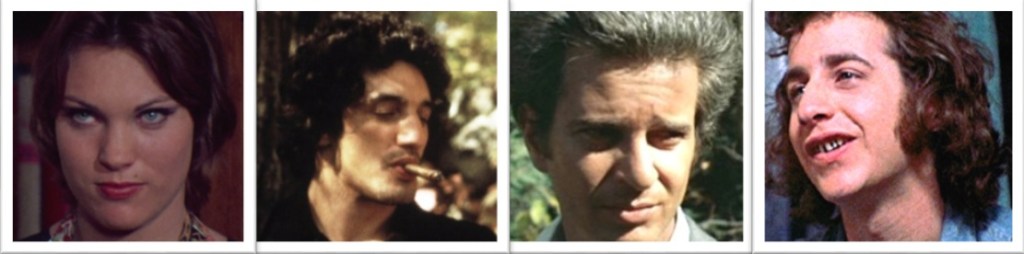
They’re hairy, nasty, greasy thuggish types, kicking around their grotty flat, beer-cans and spilling ashtrays aplenty. Dirty bathwater, stringy vests, bare-feet, yelling and cheap cigars.
But then! With a sledgehammer-like juxtaposition, we are back with lovely Mari and Phyllis as they giggle and play in the ice-cream parlour. Presumably ordering “Lambs To The Slaughter” flavoured cones. The music is la-la-lah folk. When these two groups meet, it’s going to get nasty.
In their New York flat, the gang fight, squabble, wrestle, curse and polish their handguns. Sadie won’t “put out” with her “male chauvinist dog” compadres. At least not until they get another couple of chicks to join the party.
Cue a couple of chicks to join the party. Brace yourself.
Because out on the stoop Jnr stands, wasted and stoned. Clacking along in their heels, flares, crop tops and nipples, Mari and Phyllis think this oddball might be someone who could score them some dope. Hell, who’d want to watch Bloodlust disembowel a chicken without a little toot on some of that there Columbian? Jnr invites them up to score $20 of grass. They arrive. The gang pep up a bit. This is more like a party. The door is locked behind them. They scream.
And all hell breaks loose.
But as we will see, this movie is very much one for the cut-between scenes of domesticity and debauchery, so we are suddenly back with mom and pop. Against some jarringly jolly jaunty pub-piano, they laugh and fuss with birthday banners and balloons like a sitcom. She’s icing a cake, he’s smiling paternally and trying to feel up his missus. All is well at home.
Meanwhile of course, things could not be going worse in grimy New York. The girls are terrified, the men are waving flick-knives, drooling and panting. No one is getting out of here any time soon. The girls struggle and writhe in the gorilla grips of these violent men. It’s getting very, very nasty. The gang want to party and it seems “consent” is not a word they’re troubling themselves with. Trembling and terrified, Phyllis has her shirt cut off, revealing pale breasts. Fred is all over them, sucking and pulling. Sadie cops a feel. “Get your hands away you bitch!” Frozen in fear of what is to come, Mari stands tearfully by. Phyllis is punched. Hard. Down she goes. Frozen faces. We know this is just the beginning.

But as the jaunty roller pub piano jangles, mom and dad have a canoodle on their couch, blissful of what goes on in the darkness of the New York flat.
NOTE: We are only 15mins in to the movie. Efficient, this is. Economic. But relentless, this is going to get.
Caption: Very early next morning.
So it’s day two. Once again Craven is having “fun” with his juxtaposition of wholly inappropriate score mixed with horrifying visuals. We’ll talk more about this later. But here the gang are, bright and early, hefting the lifeless unconscious bodies of our two victims down a fire escape and into their convertible sedan. Lively ragtime bluegrass jollies along like it were some family caper comedy, as we are invited, presumably to half chuckle at this Laurel & Hardy knockabout antics (honestly, they may as well be trying to move a piano up some stairs) as we witness the further degradation of the females. How we feel about this will very much colour how we respond to the rest of the movie, continuing as it will to mix camp hillbilly banjo and kazoo with scene of horrific torture and death.
Mari and Phyllis are bundled like laundry into the trunk.
At the homestead meanwhile, mom is frantic and panicky about her missing daughter while dad plays the stiff upper lip stalwart, certain she’s just out “rebelling” and will be home soon. Give it another hour and they’ll contact the authorities.
Another hour is not much more than these girls have.
We are back in the wild with lakes and rivers and flutes as the gang high-tail it out of the city, laughing, bickering and dry humping in the back of the car as it bounces along the leafy roads. We get some idle chatter about sex crimes and what presumably passes for insight as Sadie talks “Sigmund Frood,” missing as she does the days when a telegraph pole was just a telegraph pole.
But an hour passes, hence we now have the local sheriff at the parents’ house. A fat balding man with a jocular Eric Morcambe/Phil Silvers countenance, he chuckles and eats creamy slices of birthday cake in the lounge, reassuring mom and pop this is nothing to worry about. Kids being kids. They get a lot of these types of calls.
Yum yum, pass the biscuits, is there more cake?
Back on the road, the convertible grinds to a halt. Much bickering and thwacking and cursing as they realise the car isn’t going any further. The goons heave the girls from the trunk, one of them lashing out and biting her attacker. Much yelling and struggling ensues. They’re gonna have to do something with these girls. One can only imagine what. Flailing and struggling we see them led into the woods, just past…but wait…what’s this by the car? A mailbox? A Charlie Brown mailbox? With Mari’s name on the side? Awww crap. They have broken down at the end of the drive of Mari’s house. The last house on the left. Her parents sit only a few yards away in their home, through the trees. So near. But so, so far.
Inside, the cops are heading off. “The girls are just letting off steam,” they say, waving it all off, and they are back in the patrol car. As they leave, they pass the mailbox. And the broken down convertible. Should they check it out..?
Nahhh.
So we join the gang and the writhing, desperate girls as they are lead at knife point further into the dapply autumn wood. The killers laugh, drink, play with guns and shove the terrified girls onward, deeper into the trees.
They halt at a clearing. Pushing the sobbing girls about, knives are brandished against throats. They demand that Phyllis “pisses her pants” otherwise Mari gets the knife. Bullying laughter follows as Phyllis jeans darken.
We viewers wonder what we’re watching here.
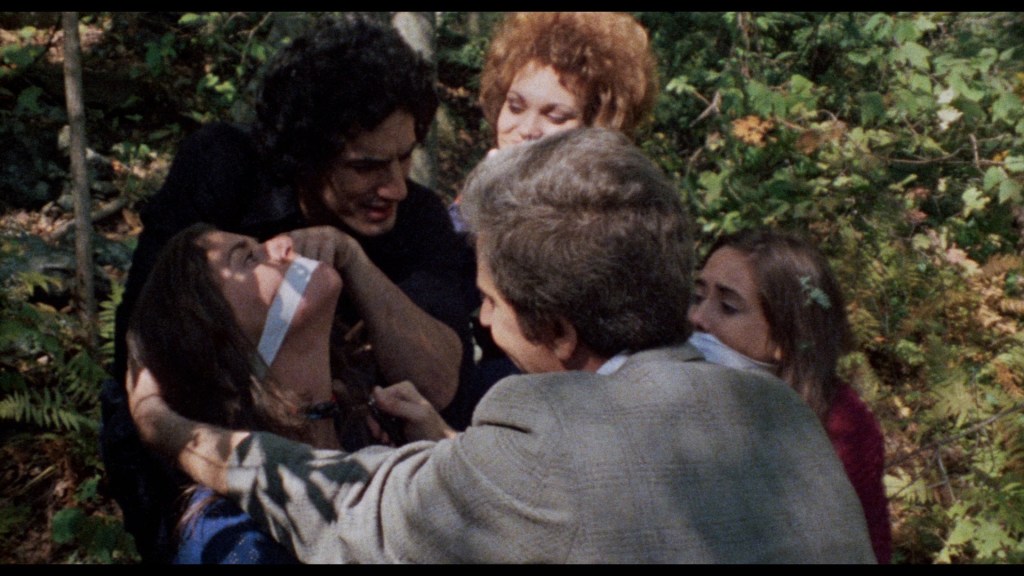
Next they are forced together, all to the buffoonish idiot chuckling of the others. Forced to hit each other, there are desperate tears and whimpers. A soft acoustic guitar plucks. Shirts are torn off, pale flesh exposed. A blur of struggles, underwear and terror. Stripped down and begging for freedom, the gang leer and laugh, forcing the girls to get on-top of each other for some kind of show.
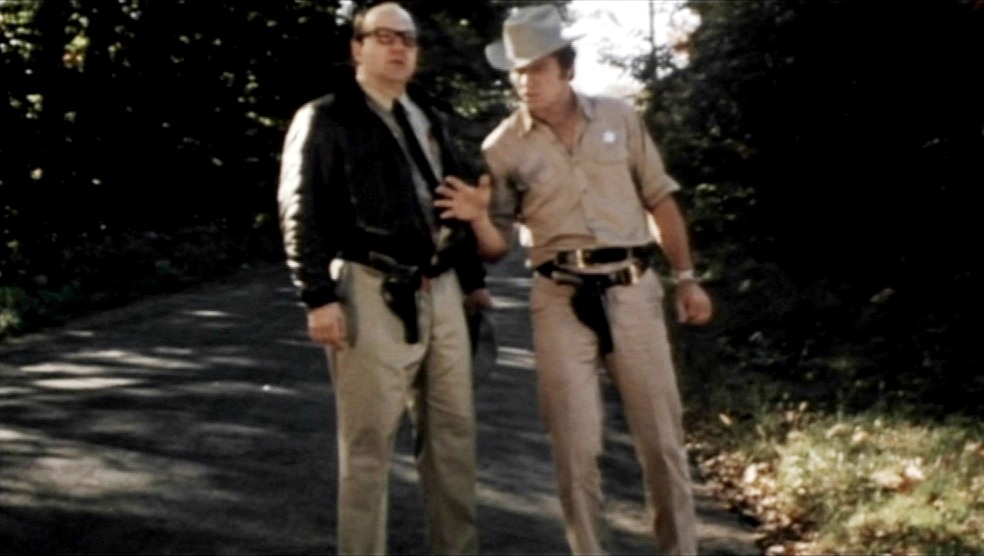
But enough of that! We haven’t had any goofy cop-comedy for a while, so let’s drop in on our cops. Eric Morcambe and his dopey assistant (who if you think resembles a sort of dumb Martin Kove from Karate Kid, it’s because it’s a young Martin Kove from The Karate Kid), in the classic brown bomber jackets and tan pants of the bumbling hick cops, horse about in the police station. Dumb talk, eye-rolls and daftness. Idiots.

Back in the forest, one killer leaves to find a weapon. Something to make “firewood” with. So they can “hot things up.” Trembling, Phyllis begs to be allowed to dress herself again. As she does, some hurried whispers between them and, leaving Mari behind, she makes a desperate, shrieking run for it. Sadie and Fred make chase. Long, long shots of a petrified Phyllis scrambling to freedom through brush and woods, as her pursuers yell and tear after her.
Left alone for a desperate moment, Mari tries to placate Jnr. Handing over her CND necklace as a peace-offering, she promises she can get him out of here. Get him free. Her dad is a doctor! He has methadone! They live just over the way!
Awww shucks! Some Homer Simpson style head-slapping meanwhile as the police radio tells Kove and Morcambe to be on the lookout for the convertible car. Doh! What are they like? They head off hastily in their patrol car back to where they saw it.
Meanwhile, Sadie catches up with Phyllis. They struggle and fight, Phyllis taking up a rock and pounding it on Sadie’s head. As she collapses, Phyllis runs. She hears a road. Freedom! Help!
But as in such things, her relief is painfully short-lived as, from within the bushes, leap Fred and Krug – now armed with a machete.
No holes barred, twisting and grabbing her, the machete is buried deep into her spine. They kick her. Once, twice, again and again as she tries helplessly to crawl free through wet leaves.
But hey! Let’s have some more twangy hillbilly comedy banjo! Because who should sputter and run out of gas in the old cop car but our two comedy cops. Wah-wah-wahhhhhh.
They clamber out and start the long walk to the house, sighing and shrugging like a couple of silent-movie twerps.
Banjos and kazoos are disbanded, thankfully, for a moment as it all goes rather John Carpenter and someone whips their synth out. Long, stabbing, droning chords accompany Phyllis’s further stabbing. In last hateful breaths, she spits on her attacker. We drift into slow-motion and it all gets woozy and disturbing. He lifts her. She screams. There is underwear, flesh, naked limbs, screaming, blood and it all drifts into madness.
Still safe, but for how long, Mari convinces Jnr Frog Features to escape with her, desperate that he is to calm his addiction. Through the forest they run, leaves underfoot…straight into the arms of the killers. Where is Phyllis? Where is she? Well here’s her hand. And the rest of her arm.
Severed at the elbow, they toss the machete hacked limb to the floor. Screaming, Mari collapses but the killers are far from done.
(By the way, this is relentlessly tiring to type. It’s relentlessly tiring to read too, I imagine. Just imagine having to watch it).
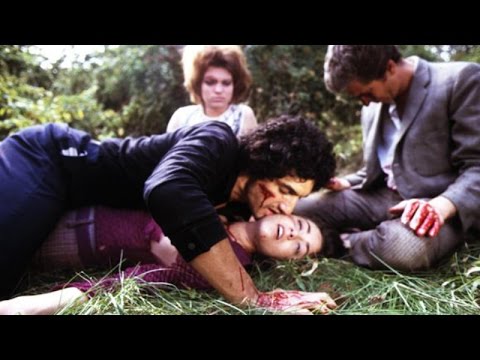
So knife to the throat, they carve as blood splashes and spurts from her neck. Jeans torn off, fumbling at her gusset, they clamber aboard and Krug violently rapes her, licking and sweating as he does.
Ho-ho! It’s a laugh, in’ it! Apparently so, as across town our bumbling silent movie Keystone Kops are trying to hitch a ride with some “punks.” Their car slows enough for Morcambe and Kove to go chasing it down the road…only for it to pull away with a squeal and a roar of laughter. The sheriff at this point actually takes his hat off and throws it to the ground in frustration. Like Yosemite Sam. Dangnabit, those rapey varmints etc.
Finally, barely able to walk, Mari staggers away, pulling on her clothes. Throwing up, her killer stand idly by. There is an almost calm moment. They watch Mari walk, mute and numb, towards the lake where she wades in. Taking aim with his glinting handgun. Krug pops off two flat BANGS and Mari collapses, lying face up in the dark lake.

We’re not even an hour in, by the way.
But ho-ho! Before the mood can darken, we welcome in one of the oddest scenes in, not only horror movie history, but cinema history. Still waddling down the leafy lane, our cops stop. Kove rests his ear to the blacktop, Tonto style. “You lamebrain!” He hears an approaching truck. And chickens.
At which point we go full Mr Bean meets Laurel & Hardy meets Harold Lloyd via Hanna Barbera as a toothless crone guffaws and cackles from the seat of her chicken truck and Morcambe and Kove do their best to scramble up onto the roof of the truck, feathers flying, skwarking coops, tumbling down, dusting their pants, hands on hips while crazy banjos accompany blue-grass whistling. Dawww, that’s another fine mess you’ve gotten’ me into! We ain;t never gonna nab ourselves no violent rapists now! Cue virtual “looks to camera” and shaking fists.

So just as we relax and sigh in the presence of these bumbling buffoons, Craven hauls us back to the killers. No smiles. No banjo. They strip to the waist and wash the blood of the girls from their hands and faces in the dark lake. Perfunctorily. Plainly. Grim business as usual.
There is some kind of jarring time jump here – as I say, the script is nothing if not efficient – and we are back with the parents. Dad sleeps the sleep of the man, resigned to whatever has befallen his missing girl. Hopeful for her return. He is awoken by his fussing wife. They have late visitors. Some people by the side of the road need help. Dad fusses and dresses sleepily.
We are in act three. Who should be standing in the parent’s lounge, totally unaware of to whom they speak, but our killers. Fred, Krug, Jnr and Sadie. Cleaned up a bit certainly. On their best behaviour. Looking for somewhere to lay their heads for the night.
Innocent, knowing nothing of who stands among the wood and tapestries of their home, mom and dad make them welcome. Poor travellers. Stranded. Of course they can offer them a bed. Good neighbours, what else could they do?
Polite, well spoken, Frank apologises and thanks them for a place to rest. Mom takes them to the rooms upstairs. As mom heads back down to her husband, the killers gather in one of the rooms. Shoes off, ties loosened, they smoke cigars and make themselves at home, sprawling on the little bed.
Frank cases the room. Something to drink? Something to steal?
When he sees it. He is wide eyed. Smirking. He beckons Krug over to the dressing table. Tucked around the mirror? Photographs. Young girls. Mari and Phyllis. Well here’s a turn up…
But our stomachs turn at the coming consequences. This is going to get messy.
Later the odd sextet sit around a dark dinner table. Mom and dad have made their visitors spaghetti. They watch, a little disturbed at how these young folk slurp and guzzle, chugging wine, talking loud, lighting cigars from the table candles. Something isn’t right. We see dad notice the visitors’ scars, puncture wounds, sticking plasters and…are those teeth marks?
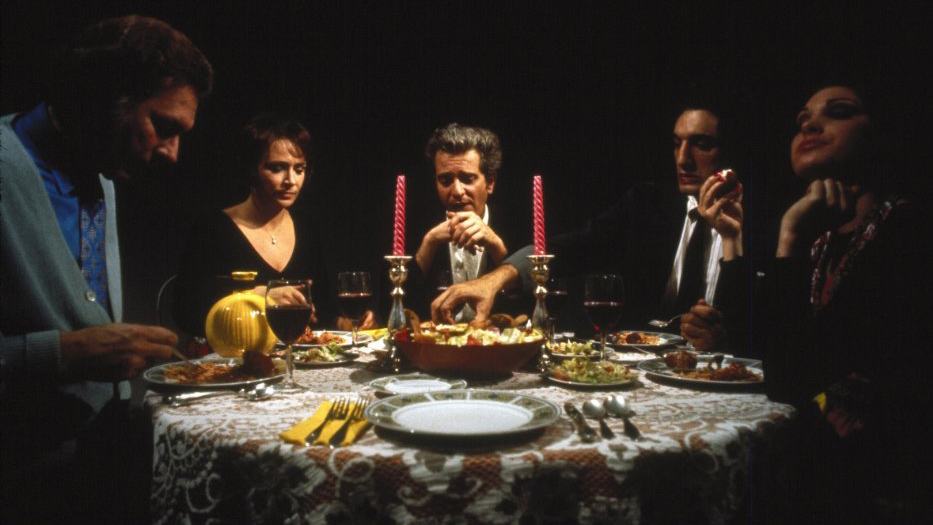
But nobody says a word.
They need to excuse Jnr, who is unwell. Clearly pangs of heroin withdrawal are too much and he retreats, groaning, to the bathroom. Sadie and Frank talk loudly, contradicting each other’s alibis. “Insurance.” “Plumbing.” “Er…insurance for plumbing…”
Dad is cautious as they all head to bed.
Mom find Jnr on the bathroom floor, retching and sweating. She does her best to help her poor guest, only to see…horrified…a silver CND necklace about his neck.
Dumbstruck she shifts to the guest room. The music tells us things are not good. As the score goes very Led Zeppelin, a pastoral, folksy faerie feel, she unzips the suitcases. Clothes. Stained with blood.
Mom’s worst fears are realised and we see her world collapse.
And we have about twenty minutes to go.
How much more do we want of this? I mean, spoilers? I guess we’ve come this far. Sigh.
Mom and dad run, run, RUN to the woods in the blue of the autumn night. Somehow, because it’s a movie, the body of the shot and drowned Mari lies in the bushes for them to fall over. There is sobbing and hugging and renting of garments and gnashing of whatnot. This is all too much. With no working phone, it is going to be down to them to meet out the justice their innocent daughter deserves.
Fred awakes in the spare room. Standing over him are mom and pop, dressed in full surgical scrubs. He is bewildered and panicky but the parents are steadfast. They hold him down. Hammer. Chisel. Peling back his lips dad places the blade against Fred’s teeth. He raises the hammer. Surely he’s not going to..? Down comes the hammer, hard, fast and
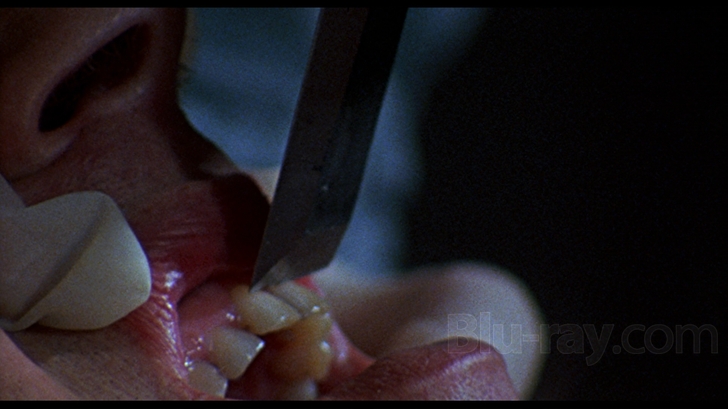
WOAH! Fred sits up, sweaty from his nightmare. All is calm. Juts a dream. But a portence of what awaits them.
Down in the basement, dad is rifling through what tools he has, to find makeshift weapons with which to destroy the killers. He lifts hammers, tools, at one point holding up a bin-lid a la Captain America’s shield.
Fred dresses in the dark, heading downstairs to see what the noise is. Who is there, in her nightgown, sipping whisky, but mom. Knowing she has to keep him distracted ad busy, she feigns a flirty come-on. Fred can’t believe his pervy luck and tries to get her to the couch for some rough sex. But mom knows Mari’s rescued corpse lies on the couch so she leads him outside. Fred follows.
Dad meanwhile is going full SAW and setting up booby traps all over the house to contain and capture the killers. Thin trip wire is laced across the lower door-frame; bare electric wires are wrapped around copper door knobs and carpet is soaked with water; shaving foam is squirted and spread over wooden floors. It’s MacGuyver meets The A Team. It’s, for want of a better image, The Last Home Alone On The Left.
Outside, Fred and mom flirt. She’s never had a man like Fred, she says. He could fuck her with both hands behind his back, he says. So true to his word, he lets mom tie his hands together, leaving him helpless. There is some careful and “ouchy” unzipping as mom prepares to fellate him. She kneels, begins. Fred is loving it…
Until an animal SCREAM as mom takes his cock in her mouth and bites down hard, hard, hard. She wrenches, he writhes, she snaps away (cock in mouth? Not so sure) and Fred collapses screaming to the floor.
The screams awake Krug, Jnr and Sadie. Dad appears with his rifle at the bedside. Krug jumps for the lamp cable, plunging the room into darkness. There are screams and yells and a BANG as the rifle goes off. Dad runs from the room to the lounge. In persuit Krug comes running, slipping as he does on the shaving foam, and down he goes. The dad scurries about the lounge, braced for a fight. Through the door to the lounge, Krug stumbles over the trip wire and falls face first to the floor. But it’s going to take more than a couple of falls to stop this monster. Toe to toe, dad and Krug hurl punches, each one glancing from Krug’s chin like nothing. He goads dad to hit him harder! Harder! But dad’s aging frame is no match for Krugs vicious bloodthirsty power. Krug sees the body of Mari dead on the couch. He taunts and teases her father, making him rain down even harder blows, but he cannot stop the huge killer.
BANG! A gunshot. They turn and see Jnr. Sweaty, strung out, quivering, he holds the gun to Krug, shaky. Fearless Krug has had enough and begins to yell at Jnr to shoot himself. “Blow your brains out!” he yells and calls over and over. Poor Jnr, baffled and bewildred by the nightmare, collapses in fear, turns the gun on himself and fires. Against a red spattered wall, Jnr collapses.
Krug turns back to face dad. But he has fled.
But what is that sound? A roar? A whine? A growl? Up the stairs of the basement dad climbs, a chainsaw held infront of him buzzing wildly.

Krug grabs up the rifle, fires. But CLICK. The gun is empty.
In the final moments, mom appears with a knife, swiping and slashing desperately at Krug as he falls and stumbles behind furniture to escape the roaring blade. Krug makes a break for it, lunging for the door, but grabbing the copper knob completes the circuit sending volts shuddering through him. Screaming in pain, Krug collapses and dad approaches slowly, chainsaw screaming.
Bursting from the house, the mom runs, followed by a wild Sadie. Screaming ansd tearing they fall, rolling in the leaves, fighting and scratching. They edge to the pool and a final blow sends Sadie splashing to the water.
As dad finally inches closer to Krug, chainsaw roaring and outstretched, he steps off screen and we hear Krug screaming.
At last the cops arrive. Morcambe yells in the doorway but can only watch, blood splashing his spectacles as dad tears Krug apart with the fierce machine, thundering away.
Breathing deep, the saw whines to silence and Morcambe surveys the carnage and debris. Kove steps up to the shaking couple, eases the chainsaw away from them, leaving mom and dad sat, breathing deep, among the remnants of broken wood and bodies.
They sit in silence for a moment as we all breathe out.
Cut to…Yes! Let’s have a hoe-down as the crazy upbeat jaunty comedy hillbilly bluegrass banjos and kazoos burst back to life! We are treated to cheery still shots, sitcom style, of the performers in the credits, a la “you have been watching…” like it was the end of Are You Being Served.
End.
Is it any good?
Where to begin? At the beginning I suppose, with the origins of this tale of family, attack and revenge. To find the source of the tale we are going to have to go back 350 years, so make sure you’ve plenty of Plutonium in your DeLorean.
In Medieval Sweden, tale was told, a ballad was sung, that spoke of Pehr Tyrsson and his daughters. It is typical of the period, I am lead to believe. I am not a scholar of Swedish 17thCentury Ballads. However the wondrous internet helps us out. The ballad is associated with a number of regions of Sweden as well as being told and retold in other Scandinavian countries. It tells a sad tale that, while we’re here and have nuthin’ much else to do, we might as well retell. Enjoy this clumsy translation:
“Pehr Tyrsson’s daughters in Vänge, the forest was so cold.
They slept a sleep too long, while the forest came into leaf.
The youngest one woke up first. The forest…
And so she woke up the others. While the forest…
Then they sat up on their beds, so they braided each other’s locks.
So they put on their silken clothes, so they went to the church.
But when they came to the Vänge hill, they met three highwaymen
“You either be highwaymen’s wives, or would you lose your young lives?”
“We do not wish to be highwaymen’s wives, we’d rather lose our young lives.”
They cut their heads off on a log of birch.
There soon three wells sprung up, the bodies buried in the mud, the clothes taken to the village.
When they came to Vänge farm, Lady Karin met them in the yard.
“And would you buy silken shifts, by nine maidens knitted and stitched?”
“Untie your sacks and let me see, perhaps I know all three.”
Lady Karin beat her chest in pain, and went to find Pehr Tyresson.
“There are three highwaymen in our yard, who have our daughters slain.”
Pehr Tyrsson grasped his sword, he slew the eldest two.
The third he left alive and then he asked him thus:
“What is your father’s name? What is your mother’s name?”
“Our father is Pehr Tyrsson in Vänge. Our mother is Lady Karin in Stränge.”
Pehr Tyrson then went to the smithy, and had iron crafted ’round his waist.
“What shall we do for our sins?”
“We shall build a church of lime and stone.
That church will be named Kerna, And we will willingly build it.”
Catchy, no? An even more gruesome tale as, in this traditional ballad, the highwaymen who murder the daughters are discovered to be the lost outcast sons of the father. Talk about your awkward conversation. And don’t get me started on the amount of Tippex needed for the family tree.
It was this sad tale, retold across the generations, which caught the eye of legendary film-maker Ingmar Bergman. You’ll know Bergman, if not for his oeuvre, then from popular culture.
Bergman is the director that Woody Allen constantly carped on about, influencing as they did Allen’s mid-period “dull” movies (Another Woman, September and Interiors). Lots of staring, lots of silence, lots of woodland, lots of symbolism.
You’ll probably know Bergman for his direction of The Seventh Seal back in 1957, a gloomy black and white movie made famous for the scenes where Max Von Sydow plays chess for his life against a cowled figure of death. You know the one.
This image crops up again in comic tributes in everything from Bill & Ted, where the titular pair battle death at Battleships, Twister, Cluedo and table football.
When death shows up to greet the Monty Python crew in The Meaning Of Life, it owes a heavy debt to Bergman’s imagery.
And, my personal fave, Sir Ian McKellan doing his best ghostly face in John McTiernan’s “Last Action Hero”
So, that’s who three time Oscar winner Ingmar Bergman is.
In 1959, in search of new inspiration, Bergman read the legend of Per Töre. Starting as an idea for a play or ballet, he eventually brought in realist novelist Ulla Isaksson to create a screenplay. Their aims in taking this tale and dramatizing it for the screen were to “explore conflicts between Christianity and paganism” and dissect the idea of guilt. The movie, starring a thunderous Max Von Sydow as the tormented father, was released to huge acclaim in 1960, picking up the Best Foreign Film Oscar at that year’s Academy Awards.

In order to best understand Craven’s Last House On The Left, I cued up The Virgin Spring last week (available here).
And what a motion picture it is. I never went to film school, however class and quality and intent and belief and passion and commitment flicker on every beautifully framed shot. The black and white cinematography is sharp and startling, making every scene a masterpiece and worthy of mounting and framing.

The performances are stunning. Staid and stoic when necessary, flowery and girlish at one turn and bleak and desolate at the next. Bergman sticks pretty closely to the ballad and there are horses and flowers and streams and cottages and the whole nine yards of Swedish medieval settings. The darkness is oppressive, the sunlight glorious. Blood on the hands of the killers, transferred in rage to the trembling father when he realises his sin of revenge; Innocence in the flower-like face of the daughter; Ugly truth of the killers who know no better. All done in stern stagey majesty while Odin silently watches and judges. Fact is, it’s terrific. A simple tale put together by masters of their craft at the top of their game.

Which one hopes is the reason a young Wes Craven – aged just 33 – stumbled over it in his search for a new cheapie film project. The story, after all, has everything an exploitation flick needs: Teenage girls, violence, rape, murder, killers, shock, twists and bloody, bloody revenge. It’s not many movie plots that can be neatly summarized in a 24 line poem. And Craven has clearly grabbed the premise and decided to make one of the most controversial motion pictures of all time. Or has he?
Last House On The Left divides a hell of a lot of people. When established movie critics such as Roger Ebert and horror aficionado Mark Kermode cannot agree, then one could argue you have a film of tastes. One man’s meat, another man’s poison, and so forth. Kermode himself tells an entertaining story of being asked to speak on behalf of the video release of Last House’ only to find that his court-room pleas for integrity, merit, historical importance and value actually incited the censors to make MORE cuts. Oopsie.
A Google search on “Last House On The Left Reviews” gets you over 36 million hits. This is a movie that divided people. It’s a close 62% fresh on Rotten Tomatoes. Hardly a landslide. It’s divided the public, the censors, the critics. Even the cast, some of whom have in retrospect, distanced themselves from the art they were part of creating. Every part of the movie someone will champion will be exactly the same scene that had others turning off, turning the channel, turning their backs or indeed, their stomachs. So all it leaves me to do, in this little project of mine, is to throw my thoughts into the mix.
Let’s take a look at the production.
Well, certainly it’s competently made. It’s got consistent colour, focus and sound. Despite the hand-held, cinema verite docu’ found-footage feel, it doesn’t suffer from a cheapie “amateurish” feel that we have seen up until now. We are in the hands of a skilled film-maker (on a budget, certainly) who knows his framing, his panning, his focus depth and has a decent tripod.
Craven has hired decent actors. When asked to play “peeping-tom murdering Alsation-kicking rapist jail-breakers” the cast are not hamming it up. There are no snickering panto villains. The cast uniformly play the violence as dull, humdrum, plodding and matter-of-fact, the mark of true psychopaths. The victims have the boobs and smiles of the innocent and we believe every scream and whimper. Dad is a sitcom stalwart, greying temples and pipe/slippers combo. Exactly the normal sort of chap things like this don’t happen to. Much, perhaps, like young America. And this was what Craven was trying to show us. Fresh, innocent, god fearing and well meaning. America is not the sort of place things like this happen. It is America herself that is the prey, the family being as Brady-Bunch as you might picture. It is wholesome values under the knife, it is innocence, it is simplicity.
The music is deliberate. Off putting, jarring, inconsistent and irritating certainly. But the lurch between the silly slapstick and the violent rapes is disconcerting. When the knockabout laughter is still ringing in the ears as women scream and men stab, it leaves us with a bad taste in our mouths. A silly art-school project, a la Oliver Stone? (See the cartoon antics in Natural Born Killers). “Clever clever” but not much more? Or a way of making the slap in the face all that more painful?
The setting is Bergmanesque, all dark lakes and birdsong. Nature bald and beautiful – a million miles away from the neon, hookers, pimps and cabs of the gritty New York that we are more used to seeing as settings for this sort of stalk and slash. Death among the leaves and shrubs is somehow more palatable. Predators and prey. The circle (twisted Mobius like into self-reference) of life, if you like.
So. The message of all this. The context. Sigh. “Context.” How much drivel has been put in front of a paying public with the film-makers braying about message and context and subtext. Who was it who said, or at least had it attributed to him, “All I Want Is a Story. If You Have a Message, Send It by Western Union.” Samuel Goldwyn, they say. Hmn.
But give the devil his due. Wes Craven was trying to tell us something, when he pulled together his small cast and trekked out into the woods to carve them up. To make us think. Make us reflect. Make us ponder, reconsider. But about what? Blood squibs? Boobs? Chickens? What was he trying to tell us?
Background writing on Last House ’ reveals Wes Craven had an agenda. Violence on screen in the 60s and 70s was sanitised, cleaned up and cleansed for the family viewer. Reports of “shootings” or “rapes” had no detail, no lurid close-ups, no in-your-face guerrilla film-maker reportage. It was reported tidily, by the numbers, matter of fact, so as not to “upset the viewer.” Your average American could read about “three killed” or “two attacked” or “group slain,”, mutter about “murder and mayhem” (as Mari’s father does) and then settle back for Leave It To Beaver and Jeopardy.
Reports from Vietnam, delivered by the department who put the “stats” into war – headed by Fred McNamara – gave daily body counts to the families waiting at home. “300 killed,” “3 villages destroyed,” “nine wounded,” and so on. Americans, in fact the rest of the Western World, could read these statistics, add them up on their “Vietnam Wallchart” and count the success and failures, like so many kids with Panini football stickers and Sun Newspaper World Cup pull out posters on the fridge.
What did it mean that “10 were killed.” Harmlessly? Painlessly? By gunfire? By gas? By fire? Hollywood and television had taught America that wartime death was painless – aside from some manly grunts and strains during the final trench cigarette when troops remembered their moms at home and sent messages to their “gals” – wartime death was heroic, glorious and patriotic. Who wants the “gory details?”
Well allegedly Wes Craven did. Sickened by the sanitised versions of murder and warfare, softened and cosied by Stars, Stripes and Statistics, he aimed to take the simple tale told in The Virgin Spring and bring it slap-bang right up into the face of an un-expecting America. Death? This is what actually happens. Stabbing? This is how it looks. Rape? This is how it occurs. Gun fire? It hurts. It hurts a lot. There are monsters out there – be they New York thugs or Vietcong soldiers – and when someone who hates you wants to do you harm, it should shock you. Frighten you. Upset you. If you can watch while a woman is knifed, while a man is punched, while a girl is shot? Then you need to know what you’re watching. This stuff is real. This stuff happens. And it’s not pretty. It upset you? Made you look away? It’s about fuckin’ time.
So. The question we are faced with is this: Given we buy this goal (and we don’t wave it away as so much revisionist crap that a horny thirty-something conjoured up in an interview to explain his gratuitous porny stabby exploitation crap), how well does Last House On The Left deliver on its goal?
Well lines like “you were meant to be the love generation!” hammer home the difficulty of a society’s good intentions. It doesn’t really matter what you’re trying to do. It’s what you actually do that matters. A CND necklace is a symbol of peace, it isn’t actually peace. And smiling and dancing behind a picket fence will never, ever protect you from the wolves outside.
Behind the mask of suburbia, Craven seems to be telling us, we are all animals. Tooth and claw. We have our tribes, our packs, our herds. And woe betide the stray who wanders from the candyfloss glow of the ice-cream parlour into the lion’s den.
Is Last House On The Left just a cautionary tale? Perhaps that’s where this sits?
Do as your mom and pop tell you. Stay on the path, beware the moon. After all, Craven cannot resist the girls “breaking the rules” before they are punished. Had they been attacked without getting drunk, lying to their parents and scoring dope? Perhaps this would have been too much even for America to take. Even Bergman’s victim is painted so sickly sweet and cloying to be more manipulative and catty. Not “deserving,” by any means. But certainly not innocent. (We are not ready for truly innocent victims. Teenage Amercians may not have wanted to go to war, but there you are, in someone else’s rice field, someone else’s village, and you are lighting them up with napalm). Marion Crane in Psycho, remember, was an adulterous lying thief. The victims in the Cannibal movies we have seen were all trespassers. So Craven can add this tale to the fables of “do unto others.”
Perhaps a wake up call?
Horrors are real. Outside, where things are dark and unknown, monsters lurk. In wartime jungles or lounging on Inner City stoops. Murders are more than statistics. Bodies are there for more than counting. Death awaits us all and we can build all the houses and fences we like and surround ourselves with money but it comes. Sometimes in a cowl. Sometimes with a chessboard. Sometimes with a machete. Sometimes with a political gain. But we can never hide from it.
Or merely a well made but ultimately nasty little exploitation flick?
Movie criticism aside, what does your average Saturday Night drive in viewer get from Last House On The Left? Knives, tits, screams, tears, blood, chainsaws and chickens. Has Craven created an artsy mythology about his piece of sleaze, to snicker behind his copy of Sight & Sound at pulling a fast one on his critics? Did ANYONE sitting through this movie come away with the messages he was peddling? Or did we all sigh and shower and feel a bit grossed out before idly tuning back to Fox News or Netflix’s 100 Best Serial Killers?
You’ll get from Last House On The Left what you bring to it, horror cinema very much being a mirror. En splatto veritas, as we used to say at school. You will find in Last House whatever you wish to find. There is method in the madness. There is a message in the mess. Cautionary tale, exploitations flick, war metaphor, wake up call for a slumbering 70s America or some grotty rape to the accompaniament of banjos. It’s all of this. And less. And more.
But ultimately, it’s over to you.
Nasty?
Yes. Thoroughly. I made the mistake of not checking the running time when I first watched an online cut of the movie, and I was immediately jolted by some very odd cuts, some jarring jumps and a lack of any of the scenes I had been promised (chainsaws, pant pissing, stabbing). After sitting through this somewhat “cleaned-up” cut, I checked by run times and it appeared I had wasted 70 minutes. A closer hut found the original 84min version. I had no choice but to rewatch the whole damned thing. But nasty it certainly is. Close ups, punches, blood, stabs, rapes, grabbing, fighting – it’s all there in grimy and grainy colour and Wes Craven, as discussed above, never cuts away or pulls away from any of the violence. It’s all up there on the screen, forcing a reaction.
Ban worthy?
What good would it do? As we’ve talked about, Craven is talking about America, he’s talking about attitudes, he’s talking about reportage, censorship, values – subjects that are always worth putting front and centre. Take it for its message, be shocked by its gratuity, be numbed by its relentlessness and made queasy by its jarring comedy. Don’t ban it. Debate it.
What does it remind me of?
The quality is reminiscent of early films in this project, so if you are happy with the textures, style and form of Cannibal Man or Headless eyes, you’ll be fine with this one. It has the relentlessness of Straw Dogs, but not the quality. It has the blood of Bay Of Blood but with more realism. It has the forests of Sacrifice. However there is nothing quite like it and it lives on in infamy as a piece of extraordinary and provocative film-making
Where to find it?
YouTube only has the edited 70min version, but DailyMotion should be able to help you.
https://www.dailymotion.com/video/x85cjkj
 letsgetthebannedbacktogether.uk
One thought on “LET’S GET THE BANNED BACK TOGETHER! Ep 15 – LAST HOUSE ON THE LEFT (1972)”